FAA Outage
Did new AI software cause the ground stop?
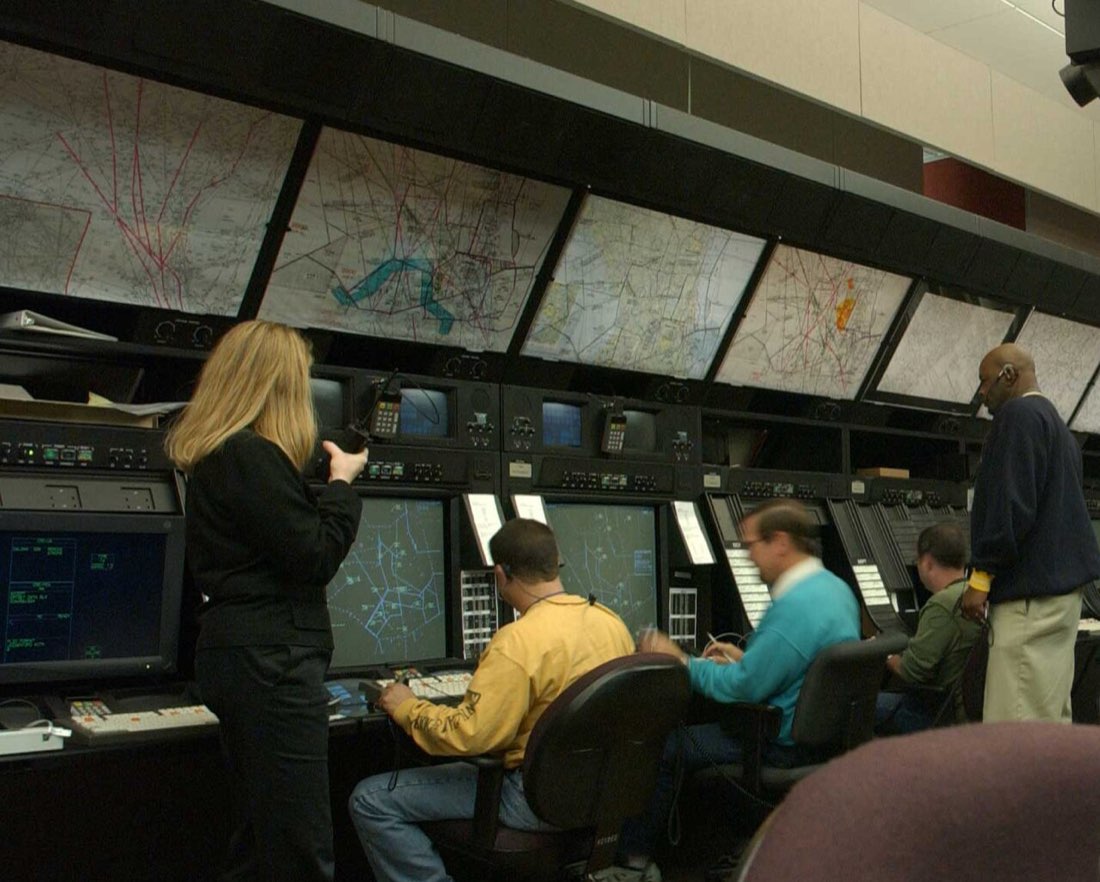

On Friday, November 13, the FAA halted every departure in the United States after a communications failure hit the centers that handle cross-country flights. Within an hour, speculation on cable news and social media pointed at SMART, an AI planning tool the FAA had expanded to all 22 of those centers three days earlier. This page tracks what officials have confirmed about the cause, and what would show whether SMART played any part.
This tracker closed on November 14, 2026. The ground stop was lifted at about 8:15 p.m. ET on Nov. 13. On Nov. 14 Transportation Secretary Sean Duffy said the failure began during contractor work at a remote facility and that the fault was not yet determined. No official has linked SMART to the outage; Duffy says it was not connected.
What the evidence shows
- On Nov. 14 Duffy said the trouble began when L3Harris was doing routine maintenance at a remote facility, upgrading copper wire to fiber optic cable. Officials are working to determine whether it was “incompetence” or “a faulty router,” he said; “we haven’t determined what the fault was.” In a statement that afternoon, L3Harris said it is “supporting the FAA in its investigation” and has completed “more than 70%” of the copper-to-fiber conversion; it did not address Duffy’s remarks.
- The network has failed before when one link broke. On Sept. 21, the day SMART debuted in the Washington region, workers in New Jersey accidentally cut an FAA telecom line and a replacement circuit failed at the Philadelphia approach control, delaying or canceling about 7,000 flights (Reuters).
- FAA Administrator Bryan Bedford said on Nov. 14 that 17 of the 22 centers saw instability but “nothing went down,” and that the FAA stopped departures as a precaution because it had not yet identified the cause (PBS NewsHour’s Lisa Desjardins, reporting from the briefing).
- A senior official told NBC News the system that caused the problem was found and taken offline; the FAA says a router was sending too much data and overloading older air traffic control equipment.
- On Nov. 13 Duffy said switches and routers on the legacy network “got overloaded with data,” and Homeland Security Secretary Markwayne Mullin said new technology “was overwhelming the older system.”
- SMART went to all 22 centers on Nov. 10. On Nov. 13 Duffy said it “isn’t plugged in” and could not have played a role; its developer, Air Space Intelligence, says the same. No document has been published showing how SMART connects to center systems.
- FAA Administrator Bryan Bedford said on Nov. 14 there was “zero evidence of anything nefarious and zero evidence of anything AI-related” (Newsday). Transportation Secretary Sean Duffy said the same day, “we don’t believe this was cyber at all,” blaming “contractor error or a faulty piece of equipment” during an L3Harris copper-to-fiber upgrade (Al Jazeera). A root-cause analysis has been promised but not released.
- A September GAO report found that the FAA’s air traffic control overhaul, which includes replacing old copper lines with fiber, runs on 11,389 separate project schedules that are not integrated, so installations at the same sites are “generally” scheduled “without optimizing the schedules to reduce impacts to controller operations” (GAO-26-107992). Officials have not said how the Nov. 13 work was scheduled.
What would reopen it
- An FAA, NTSB or Inspector General finding names a cause other than the L3Harris upgrade, or ties SMART or its Nov. 10 rollout to the failure.
- Documents show SMART was connected to the center networks, contrary to Duffy’s statement.
- The FBI or CISA attributes the outage to a cyberattack.
Closed trackers reflect our provisional conclusion. We may reopen this one at any time if our editors see that new information has become available. The page and its sources stay online as a record.
On Nov. 14 Transportation Secretary Sean Duffy said the ground stop began when contractor L3Harris was upgrading copper wire to fiber optic cable at a remote facility, and that officials are working out whether a faulty router or an installation error was to blame. On Nov. 13 he said SMART “isn’t plugged in” and could not have played a role; its developer, Air Space Intelligence, says the same. SMART went to all 22 centers on Nov. 10, and no document has been published showing how it connects to center systems. The FAA has not yet said what the fault was.
What would change this rating ↓
groundstop.america2.newsGet America 2.0 in your inbox
Analysis of Russian influence, information warfare and the networks behind them. Free; unsubscribe anytime.
Latest reports
New reporting from major outlets and official sources, listed as it appears. Our monitoring adds headlines from major outlets automatically. "Checked" means our software fetched the full report and confirmed it supports its headline. "Reviewed" means an editor checked it against its source. "Auto" items have not been checked yet. Tap a label for our note. None of this is an endorsement. Our assessment is the rating above.
- US blames system upgrade for longest nationwide FAA ground stop since 9/11 (Al Jazeera)
reviewed ▾
Our note: Duffy briefing: “contractor error or a faulty piece of equipment”; L3Harris “own this network”; “we don't believe this was cyber at all”; Bedford: “zero evidence of anything nefarious.”An editor checked this report against its source. (2026-11-14) - Duffy’s briefing on ground stop disrupted by tech difficulties: ‘This is not operational?’ (The Washington Post)
reviewed ▾
Our note: Live-blog entry: Duffy's Nov. 14 briefing was briefly interrupted by microphone problems.An editor checked this report against its source. (2026-11-14) - Secretary Duffy describes events that led to FAA ground stop (CNN)
reviewed ▾
Our note: CNN video (Nov. 14 briefing): Duffy says the telecom issues were not the result of a cyberattack. Description read; video not transcribed.An editor checked this report against its source. (2026-11-14) - Duffy Probing Possible L3Harris ‘Incompetence’ in FAA Meltdown (Bloomberg.com)
reviewed ▾
Our note: Duffy: L3Harris was replacing copper with fiber at a remote FAA site when a router flooded others with 1,000+ connection attempts every 4–5 seconds; DOT examining whether L3Harris was at fault.An editor checked this report against its source. (2026-11-14) - FAA back at "full operations" after Friday outage, Transportation Sec. says (Axios)
reviewed ▾
Our note: Duffy: a contractor was replacing an old copper line, which was being discontinued, with fiber and installing a new router; contractor error vs. faulty equipment is still undetermined. He renewed his call for Congress to fund upgrades.An editor checked this report against its source. (2026-11-14) - FAA blames Friday's ground stop on 'equipment issue' during telecoms network upgrade (NPR)
reviewed ▾
Our note: Duffy: L3Harris was replacing copper with fiber at a remote site; the routers there date to 2001; the exact error is still under investigation. Bedford: no evidence of anything nefarious or AI-related.An editor checked this report against its source. (2026-11-14) - Duffy points finger at FAA contractor for nationwide ground stop (Politico)
reviewed ▾
Our note: Duffy Nov. 14: unclear whether L3Harris installer error or a faulty router; “This was an FAA system that didn’t meet the moment.” L3Harris had not commented.An editor checked this report against its source. (2026-11-14) - Thousands of Flights Are Canceled After Friday’s Nationwide Ground Stop: Live Updates (The New York Times)
reviewed ▾
Our note: New York Times live coverage of Duffy’s Nov. 14 briefing: he said the trouble began when contractor L3Harris was upgrading copper wire to fiber optic cable at a remote facility, and that “we haven’t determined what the fault was.”An editor checked this report against its source. (2026-11-14) - Travelers stranded and thousands of flights canceled after FAA ground stop. Here's what we know (CBS News)
reviewed ▾
Our note: Recovery explainer: Duffy “back at full operations”; 3,800+ Saturday cancellations (FlightAware); stop 3:36–~8:20 p.m. EST Friday; first national stop since Jan. 2023.An editor checked this report against its source. (2026-11-14) - What the FAA says was behind nationwide ground stop (NBC News)
reviewed ▾
Our note: NBC video short (1 min) on the FAA’s stated cause; companion clips carry Duffy saying SMART is not connected and there is no evidence of a hack.An editor checked this report against its source. (2026-11-14)
What would change this assessment
The cause will be settled by the FAA, DOT, the NTSB or the DOT Inspector General, or by tier-one reporting that names documents or on-record officials. A timing coincidence does not count as evidence.
Would move the rating up
- not seenAn official root cause naming SMART: the FAA, DOT, NTSB or Inspector General says SMART, or SMART's connection to existing center systems, triggered or worsened the failure.
- reportedA software change on Nov. 13: documents or on-record officials show new code or a configuration change reached the center communications or automation systems on or just before Nov. 13. Reported Nov. 13 by CBS News and Bloomberg, citing unnamed sources; not yet on the record.
Would move it down, toward closing
- seenA named telecom fault: the FAA or its contractor identifies a specific physical or carrier failure (a cut cable, a failed switch or router, a provider outage) with no software involved. Seen Nov. 14: Duffy traced it to a router installed during an L3Harris copper-to-fiber upgrade at a remote facility; the exact fault is not yet determined (NYT).
- partly seenSMART cleared on the record: the FAA or an investigator states that SMART was not involved, and SMART stays in service at all 22 centers after flights resume. On Nov. 13 Duffy said SMART “isn’t plugged in” (The Hill). Whether SMART stays in service at all 22 centers has not been reported.
Would change the story
- not seenA cyber attribution: the FBI or CISA says the outage was a cyberattack. That would be a different question from the AI claim, and we would add it here.
What is actually known
- The stop. The FAA grounded all U.S. departures on Friday afternoon “due to extraordinary circumstances and for reasons of safety.” Flights already in the air could continue to their destinations. An FAA spokesperson said a communications problem was affecting the Air Route Traffic Control Centers, which handle flights across the country (CNN).
- The FAA's stated cause. About an hour later the FAA said the ground stop was caused by a “temporary telecommunications outage,” and that all flights were accounted for (CNN). Transportation Secretary Sean Duffy described “a communication issue impacting all Air Route Traffic Control Centers” and said FAA technicians were investigating. As of this update, no root cause has been published.
- What failed. In audio published by ATC.com, a controller warned pilots near Chicago that approach control was “ATC Zero” (no air traffic control services) and said, “We lost all of the frequencies and all of the automation for the handoff and strips and stuff” (CNN). That describes radio and flight-data systems, not flow planning.
- Officials on the cause. Homeland Security Secretary Markwayne Mullin said there was “no indication as of yet that this was a nefarious attack,” but would not rule out any cause. He said he saw no reason to connect the outage with the Nov. 12 Microsoft outage. Two law enforcement officials told CNN that preliminary reports indicate it was not a cyberattack (CNN).
- What SMART is. On Nov. 10 the FAA said it would use SMART (Strategic Management of Airspace, Routes and Trajectories) “in the airspace of all 22 centers,” after a rollout in the Washington, D.C. region that began Sept. 21 (FAA). The FAA's fact sheet calls it a cloud-based, AI-assisted planning platform that “works alongside existing FAA systems.” A team of specialists in Washington validates its recommendations before they go to the Air Traffic Control System Command Center, and controllers “remain responsible for keeping aircraft safely separated.”
- Who was consulted. The union representing air traffic controllers said it was not involved in designing or testing SMART (Ars Technica). The FAA has put the system's cost at $875 million (same source).
- Cause as stated. On Nov. 14 Duffy said the trouble began when contractor L3Harris was doing routine maintenance at a remote facility, upgrading copper wire to fiber optic cable. Officials are working to determine whether it was “incompetence” or “a faulty router,” he said; “we haven’t determined what the fault was” (NYT). Earlier, asked whether officials knew the cause, Mullin said: “No, we’re going to go through it. But I’m not going to make assumptions.” A congressional official told the New York Times that the National Security Council and the Pentagon had said the cause was not yet clear. Microsoft said it had no indication the ground stop was related to its outage (NYT). A person familiar with the matter told Bloomberg the FBI does not believe a cyberattack or crime caused the outage, and that one line of inquiry is whether a software update did; the report does not name SMART (Bloomberg). Multiple sources told CBS News that an update to the private communications network connecting the air traffic control system caused it to reboot, leading to a crash and a communications outage (CBS News). Transportation Secretary Sean Duffy attributed the outage to the FAA's legacy network, saying switches and routers became overloaded with data and went down; it was not immediately clear what caused the overload (Reuters). DW, citing wire reports, said Mullin saw no indication that a cyberattack or artificial intelligence caused the breakdown (DW).
- Aging facilities. Republican staff of the Senate Commerce Committee noted that no new Air Route Traffic Control Center has been built “since LBJ was in office.” Congress recently set aside $1.9 billion to replace and consolidate the centers (NYT).
- The scale. By about 4:45 p.m. ET, FlightAware counted more than 7,800 delayed U.S. flights and about 350 cancellations (NYT). This is only the third nationwide ground stop in decades; see “The last times this happened” below.
What we could not check: whether SMART shares any network path, vendor or data feed with the center communications systems that failed. The FAA's public material doesn't say.
Claims in circulation
The most-shared claims about the cause, and what public sources can confirm. Tap a row for the record; the link icon copies a direct link.
Official account, details pendingA telecommunications outage caused the ground stop.
This is the FAA's own explanation, and DHS Secretary Mullin repeated it. Neither has said what failed, or why it affected every center at once (CNN).
Where it came from: FAA statement, Nov. 13.
Donation real, no outage linkThe SMART contractor’s PAC gave $2,500 to Duffy’s son-in-law’s campaign. No record links the gift to the contract or the outage.
FEC filings show that Air Space Intelligence’s corporate PAC gave $2,500 to Alfonso for Congress on March 30, 2026 (FEC). The campaign is that of Rep.-elect Michael Alfonso (R-Wis.), Duffy’s son-in-law. It was one of 19 contributions the PAC made from February to July, totaling $50,000, most of them to House and Senate appropriators. In June DOT announced that it had awarded ASI the contract for SMART, worth up to $875.9 million. The Bulwark first reported the donation in September, in a story on transportation-industry donors to Alfonso (The New Republic). ASI is not Alfonso’s company, and no record shows a $3 million donation. Officials trace the outage to an L3Harris network upgrade, not to SMART.
Where it came from: a Raw Story report on Nov. 13 that first gave the figure as $12,500 and then corrected it to $2,500. Posts and forum comments inflated it to “$3 million” and called ASI his company.
UnlikelyThe FAA's new SMART AI tool caused the outage.
Officials trace the outage to a router during an L3Harris fiber upgrade at a remote facility, and on Nov. 13 Duffy said SMART “isn’t plugged in” (The Hill). SMART went nationwide on Nov. 10; no document shows how it connects to center systems. No official finding links SMART to the failure, and neither report below names it. But the case no longer rests on timing alone. Multiple sources told CBS News that an update to the private communications network connecting air traffic control caused a reboot and crash. A person familiar with the matter told Bloomberg the FBI is examining whether a software update caused the outage. SMART went nationwide on Nov. 10 and, per the FAA, runs alongside existing center systems. Whether the update touched SMART or its network link is not public. After flights resumed, Homeland Security Secretary Markwayne Mullin said new equipment and technology the FAA was adding “was overwhelming the older system,” without naming it (video). Air Space Intelligence, SMART's developer, says its product played no role. Secretary Mullin said he saw no evidence of a link but did not rule one out.
Where it came from: on-air speculation Friday afternoon, including by aviation lawyer and former DOT Inspector General Mary Schiavo, who said, “I don't know if they're linked,” in a clip viewed about 590,000 times by evening.
No evidenceThe outage was a cyberattack.
Two law enforcement officials told CNN that preliminary reports indicate it was not. Mullin said there was no indication of an attack but would not rule anything out (CNN). On Nov. 14 Duffy said, “we don’t believe this was cyber at all” (Al Jazeera).
Where it came from: social-media speculation during the stop.
MisquotedProject 2025 called for splitting air traffic control from the FAA. It did not call for privatizing a communications system.
The Heritage Foundation’s Mandate for Leadership (2023) argues on p. 632 that the FAA’s air traffic service and its safety regulator “ought to run separately.” It recommends separating the Air Traffic Organization from the FAA (p. 633), moving it out of Washington, paying for it with user fees and letting it issue bonds (p. 634). All of these changes “require legislation.” Page 633 does not mention privatizing a communications system. It discusses remote towers, text messaging between controllers and pilots, and consolidating centers. No law separating the Air Traffic Organization has passed, and no official account connects the Nov. 13 outage to the plan.
Where it came from: a verified X account’s post (about 23,000 likes and 426,000 views by Nov. 14) quoting both pages as if from the document. Copies of the post present the ground stop as the plan’s first step.
No evidenceThe outage is linked to the Microsoft outage of Nov. 12.
Mullin: “I don't see any reason to connect those two at all … Those are separate issues” (CNN).
Where it came from: reporters' questions at the White House.
The last times this happened
Friday's stop is only the third nationwide ground stop in decades (New York Times).
| Date | What happened | How long |
|---|---|---|
| Sept. 11, 2001 | After the terrorist attacks, the FAA closed U.S. airspace and ordered planes in the air to land. It was the first unplanned closure of U.S. airspace; only military, police and medical flights flew (background). | Commercial flights resumed Sept. 13, about two days later. |
| Jan. 11, 2023 | The NOTAM system, which sends pilots safety notices, failed after a contractor unintentionally deleted files. Airborne flights continued to their destinations; thousands of flights were canceled or delayed (CNN). The FAA found no evidence of a cyberattack. | About 90 minutes (NYT). |
| Nov. 13, 2026 | A communications failure at the Air Route Traffic Control Centers. The FAA calls it a “temporary telecommunications outage.” | About four and a quarter hours (airspace reopened 8:15 p.m. ET, per Duffy; AP reported departures resuming about 8:30). |
A regional precedent: on the day SMART debuted for the Washington, D.C. airports in September, a circuit failure in air traffic communications delayed or canceled about 7,000 flights in the Northeast, per FlightAware (Reuters). Contractors had accidentally cut the fiber line meant to back it up (New York Times).
What to watch next
- The FAA's technical explanation: what failed (carrier circuit, switch, software), who operates it, and why one fault reached all 22 centers.
- SMART's status after restart: whether the FAA pauses SMART, rolls it back, or keeps it running at every center.
- Fast levers: the DOT Inspector General, NTSB involvement, and letters from the House and Senate aviation subcommittees asking for SMART's deployment and testing records. These move faster than hearings.
- The unions: NATCA (controllers) and PASS (FAA technicians) are often first to describe on the record what failed in the facilities.
Timeline
Times are Eastern.
- Sep. 21SMART starts in the Washington, D.C. region (FAA).
- Nov. 10The FAA announces SMART for all 22 centers (FAA).
- Nov. 12A global Microsoft outage disrupts Outlook, Teams and other services (CNN). DHS later says it is unrelated.
- Nov. 13, ~4 PMThe FAA grounds all U.S. departures after a communications failure at the Air Route Traffic Control Centers (CNN).
- Nov. 13, ~5 PMThe FAA attributes the stop to a “temporary telecommunications outage.” Mullin: no indication of an attack, no time frame for a fix (CNN).
- Nov. 13, 8:15 PMThe FAA reopens the airspace, Transportation Secretary Sean Duffy says (NBC News); AP reports departures resuming at about 8:30 p.m. (AP).
- Nov. 14Duffy says the failure began during L3Harris work at a remote facility, upgrading copper wire to fiber; the fault is not yet determined (NYT).
Key sources
- FAA general statements, including the Nov. 10 SMART expansion notice.
- FAA SMART fact sheet (PDF).
- CNN live coverage, Nov. 13.
- New York Times live coverage, Nov. 13.
- Ars Technica on the SMART expansion.